
Quick answer
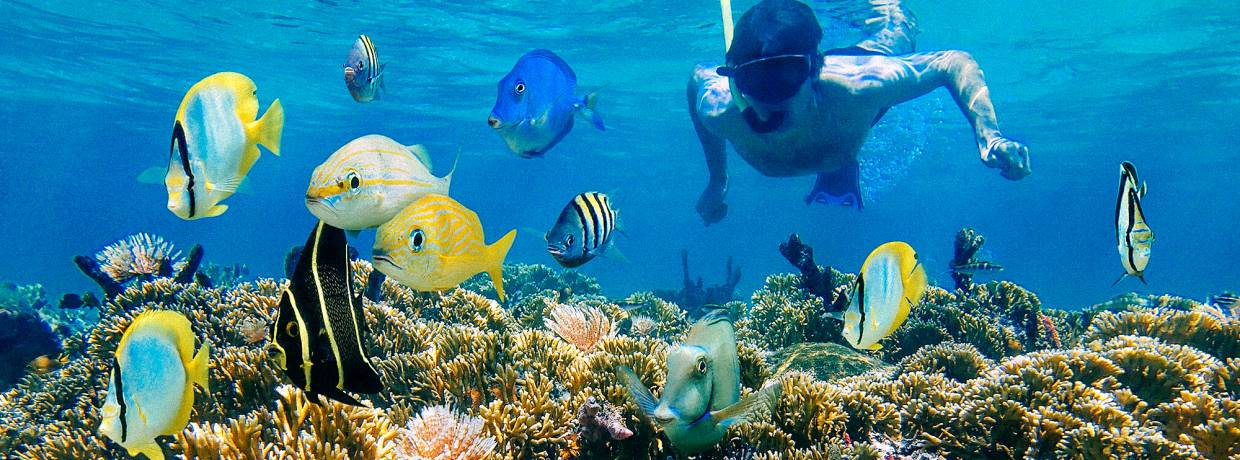
Does Belize have good snorkeling? Yes. The Belize Barrier Reef offers year-round access to healthy coral systems, consistent 60–100 foot visibility, and high marine biodiversity including nurse sharks, rays, and over 500 fish species. Most sites sit in protected marine reserves with calm, shallow conditions suitable for beginners and advanced snorkelers alike. Water clarity peaks December through May, though summer months remain viable with slightly reduced visibility.
The Belize Barrier Reef stretches 190 miles along the Caribbean coast and forms part of the Mesoamerican Reef, the largest barrier reef system in the Western Hemisphere. Unlike many Caribbean destinations where reef health has declined, Belize maintains active marine reserves with enforced conservation protocols—visitors pay a 40 BZD conservation fee that funds reef monitoring and protection. This investment shows: coral cover remains robust in protected zones, and fish populations sustain themselves at densities rare elsewhere in the region. Does Belize have good snorkeling compared to other Caribbean islands? The answer hinges on accessibility and variety. Most premier snorkel sites lie within a 30-minute boat ride from coastal departure points, and the reef's structure creates natural channels and lagoons where currents stay manageable even when offshore conditions roughen. Nurse sharks and southern stingrays frequent shallow sand flats, while elkhorn and staghorn coral gardens grow in water shallow enough to observe from the surface without diving. The Great Blue Hole draws attention for its geological oddity, but the surrounding Lighthouse Reef atoll offers snorkeling depth and clarity that rivals any site in the Caribbean. Belize snorkeling quality depends partly on managing expectations around weather. December through May brings the driest months, calmer seas, and water temperatures around 79–82°F. June through November sees higher rainfall and occasional afternoon chop, though morning conditions often remain excellent. The reef system's orientation provides natural wind breaks, and many reserves enforce snorkeler limits to prevent crowding and reef contact. Guides familiar with tidal cycles and current patterns select entry points that maximize visibility and minimize effort, a critical advantage for travelers unfamiliar with the coast. What separates Belize from competitors is the combination of reef health, regulatory oversight, and logistical ease. No advanced certification is required, and most operators offer half-day trips that cover multiple sites. The marine reserve system ensures that even heavily visited areas like Hol Chan maintain ecological integrity, and enforcement of no-touch policies keeps coral damage lower than at comparable destinations. For snorkelers weighing Caribbean options, Belize delivers consistent conditions, diverse marine encounters, and infrastructure that prioritizes long-term reef sustainability over short-term tourist volume.
“Coral cover remains robust in protected zones, and fish populations sustain themselves at densities rare elsewhere in the region.”
Does Belize Have Good Snorkeling? What the Reef Facts Show
The reef itself supplies the evidence behind Belize's reputation for good snorkeling. Its scale, protection status, and marine diversity are all independently documented and verifiable.
UNESCO World Heritage Site since 1996
The Belize Barrier Reef Reserve System was inscribed by UNESCO in 1996 for its exceptional marine ecosystems, including reefs, atolls, and mangrove islands.
Second-largest barrier reef on Earth
Stretching roughly 300 km along Belize's coast, it ranks as the second-largest barrier reef system in the world after Australia's Great Barrier Reef.
Part of a 1,000 km reef network
The Belize section forms part of the larger Mesoamerican Reef, which runs along the coasts of Mexico, Belize, Guatemala, and Honduras.
Home to over 500 fish species
Marine biologists have recorded more than 500 fish species within the reef system, alongside roughly 65 stony coral species.
Includes three of four Caribbean atolls
Turneffe Atoll, Lighthouse Reef, and Glover's Reef, three of only four true coral atolls in the Caribbean, sit within Belize's reef system.
Seven protected marine reserves inside the system
The reserve system comprises seven UNESCO-designated protected areas, managed to limit damage to coral and seagrass habitats.
Manatees and marine turtles both present
The reef supports resident populations of West Indian manatees along with hawksbill, loggerhead, and green sea turtles, all documented by conservation surveys.
Great Blue Hole sits within this system
This karst sinkhole, made famous by Jacques Cousteau's surveys, lies inside Lighthouse Reef, one of the atolls belonging to the Belize Barrier Reef Reserve System.
Best Time to Snorkel the Belize Barrier Reef
The clearest, calmest snorkeling in Belize falls in the late dry season, roughly April through May, combined with a morning start between 08:00 and 11:00 before afternoon trade winds churn up the surface.
Late November to May (dry season)
Moderate to high, peaks around holidaysSunny, low rainfall, air near 24-29°C
This stretch brings the flattest seas and best underwater visibility, with April and May often the clearest before rains build.
June to November (wet season)
Lower, except brief holiday spikesWarm, humid, frequent showers, 26-31°C
Rain and runoff can cloud nearshore water, and tropical storms occasionally cancel trips outright, though mornings between systems still snorkel well.
Morning arrivals, 08:00-11:00
Fewer boats and calmer water—
Wind and boat traffic build through the day, so an early start gives flatter seas and better light for spotting reef life.
Afternoon hours
Busier, choppier conditions—
Afternoon winds roughen the surface and stir sediment, reducing clarity compared to the morning window.
Verdict: Aim for a morning slot between 08:00 and 11:00 in April or May for the calmest seas and clearest water of the year.
Does Belize Have Good Snorkeling Spots? The Named Sites to Know
The Belize Barrier Reef Reserve System is not one single site but a chain of named marine reserves, each with a distinct underwater character. A few zones account for most of what visitors describe when they talk about snorkeling here.
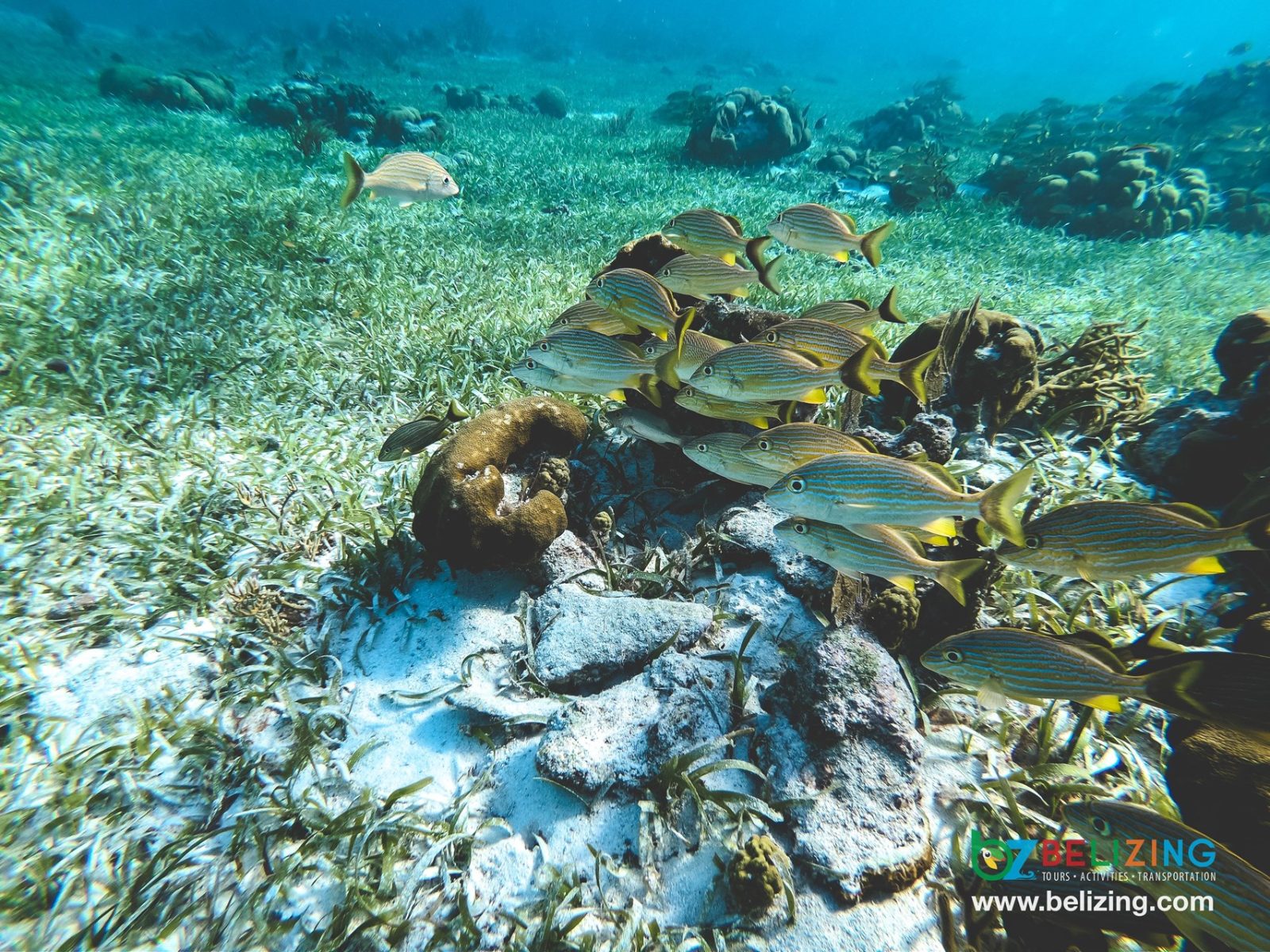
Hol Chan Marine Reserve
A cut in the reef near Ambergris Caye known for dense concentrations of reef fish, moray eels, and nurse sharks in a channel only a few meters deep.
Look into the channel walls, not just open water, for eels.
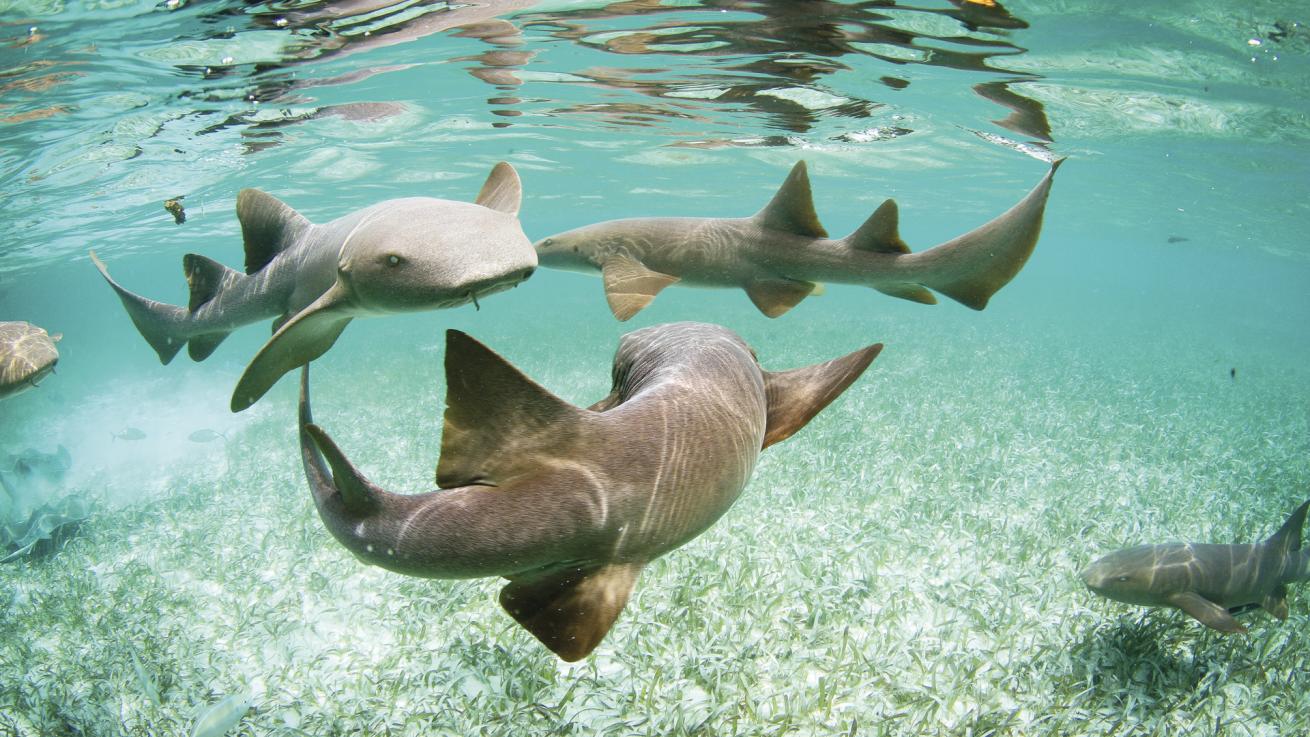
Shark Ray Alley
A shallow sandy patch adjoining Hol Chan where nurse sharks and southern stingrays gather in numbers close enough to observe without diving deep.
Stay horizontal at the surface, rays pass just below.
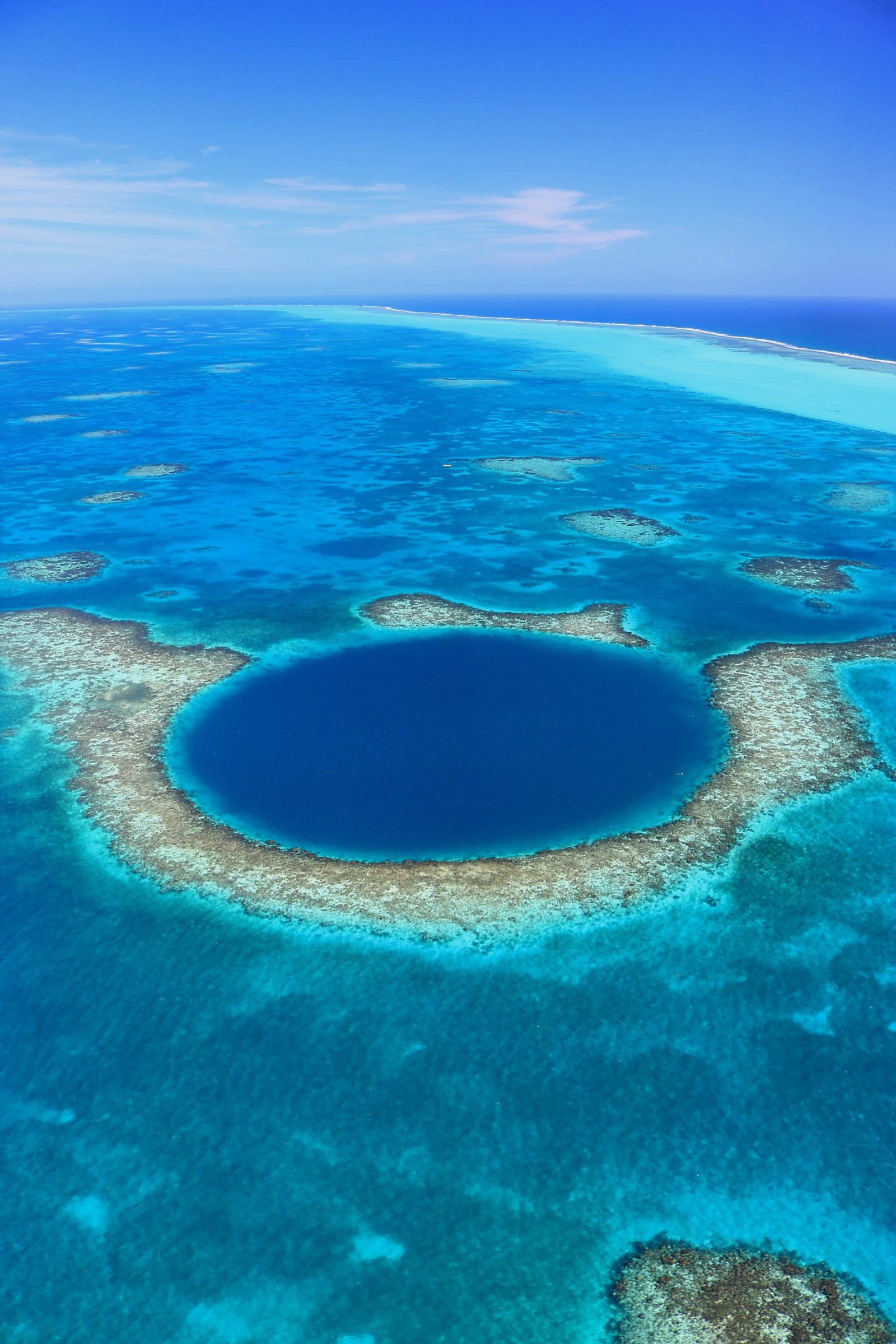
Great Blue Hole
A circular karst sinkhole roughly 300 meters across within Lighthouse Reef Atoll, more dived than snorkeled but its rim supports reef life visible from the surface.
Snorkel the rim edge, not the dark center, for coral.
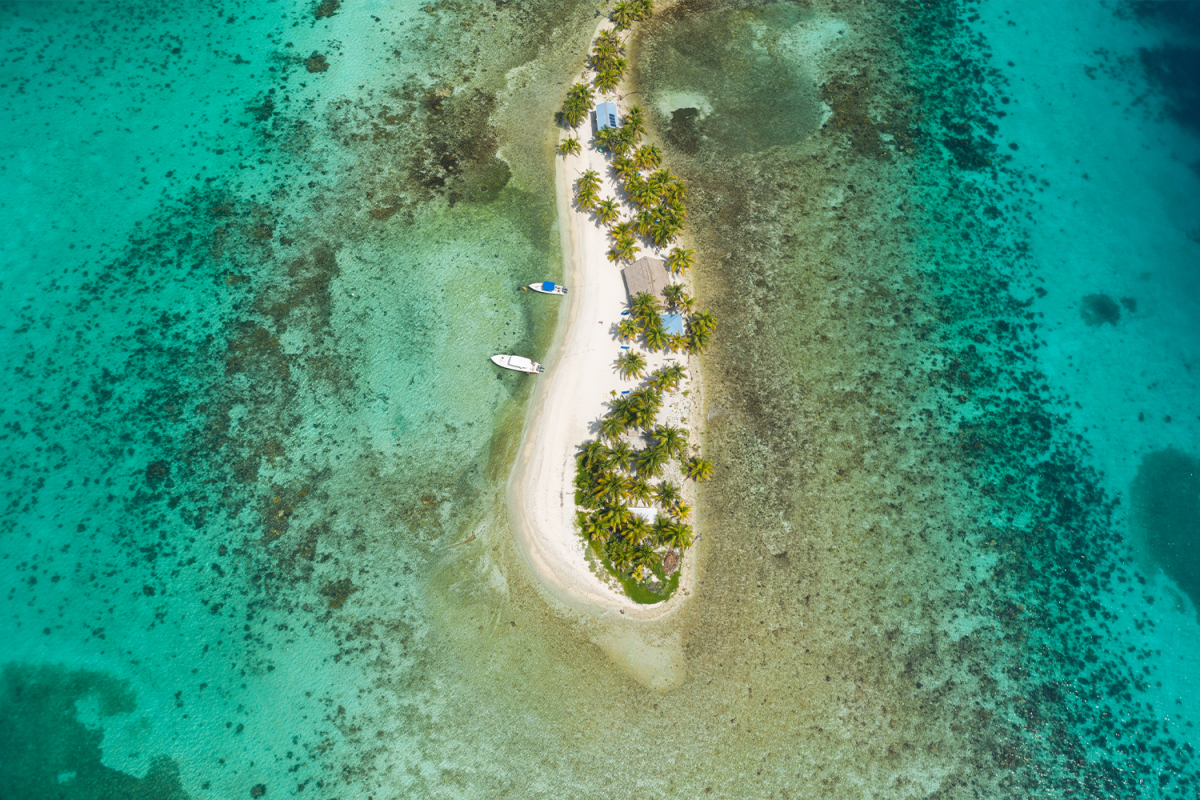
Laughing Bird Caye
A narrow caye and marine reserve south of Placencia with fringing reef close to shore and a mix of hard and soft coral formations.
Enter from the caye's leeward side for calmer visibility.
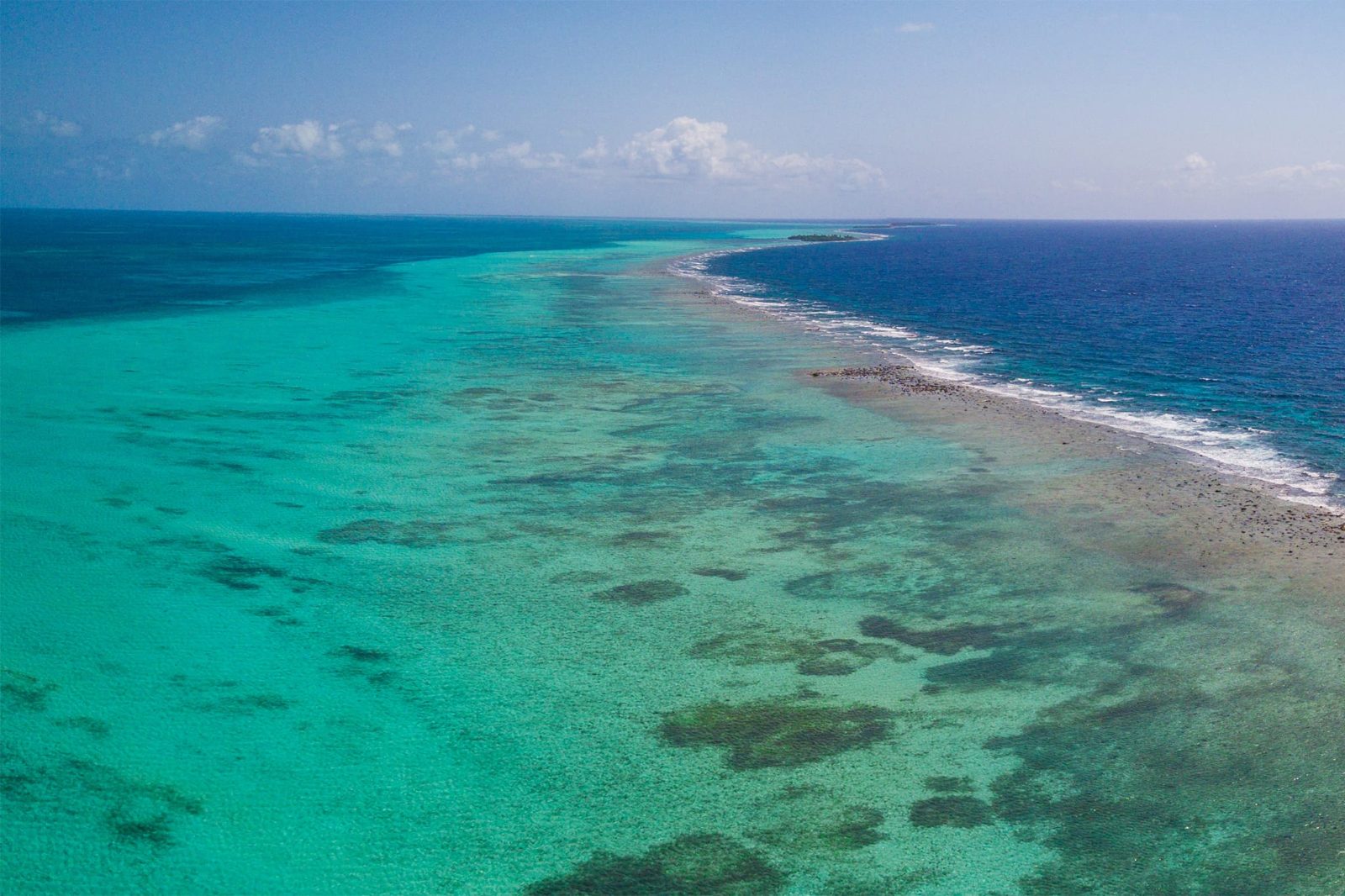
South Water Caye Marine Reserve
One of the largest reserves in the system, covering patch reefs, seagrass beds, and mangrove edges with varied fish life across each zone.
Cross from seagrass to reef edge to see the contrast.
Getting to the Belize Barrier Reef for Snorkeling
The Belize Barrier Reef Reserve System lies offshore in the Belize District, so there is no road or rail access — every route to the reef starts with a boat from a mainland town or a caye. Most visitors stage from Belize City, San Pedro (Ambergris Caye), or Caye Caulker before the final boat crossing to the reef itself.
Philip S. W. Goldson Highway or coastal roads to Belize City
Water taxi from Belize City to San Pedro, Ambergris Caye
Water taxi from Belize City to Caye Caulker
Charter or tour boat from San Pedro or Caye Caulker to reef sites
From Belize City airport or downtown to water taxi terminal
Snorkeling Etiquette: Dos and Don'ts on the Belize Barrier Reef
The Belize Barrier Reef is a protected marine reserve where visitor conduct directly impacts fragile coral ecosystems and marine life. Following these guidelines helps preserve the reef while keeping you safe and compliant with conservation regulations.
Do
- Maintain at least three feet of distance from all coral formations
- Use only reef-safe sunscreen without oxybenzone or octinoxate
- Keep your fins controlled and horizontal to avoid kicking coral
- Stay within designated snorkeling zones and marked boundaries
- Report any injured marine life to your guide immediately
- Secure all loose items before entering the water
Don't
- Touch, stand on, or grab coral—contact kills polyps and damages structure
- Feed fish or other marine animals in any circumstances
- Chase, corner, or attempt to ride sea turtles
- Collect shells, coral fragments, or any natural materials from the reef
- Wear regular sunscreen that can bleach and poison coral
- Anchor boats directly on coral—use mooring buoys only
Snorkeling Prep Checklist for the Belize Barrier Reef
Most visitors overlook these timing and gear details that make the difference between mediocre visibility and a productive reef visit.
-
Book a boat or guide in advance — Independent reef access requires a licensed operator, and popular boats fill days ahead.
-
Arrive between 08:00 and 11:00 — Seas are calmer and water clearest before afternoon winds stir up sediment.
-
Test your mask fit before departure — A leaking mask wastes snorkel time and limits how long you can stay down to observe marine life.
-
Pack reef-safe sunscreen (mineral-based) — Chemical sunscreens damage coral; bring a mineral formula or a rash guard instead.
-
Bring 40 BZD in cash per person — The marine reserve conservation fee is collected on-site and card machines are not always available.
-
Confirm your operator provides snorkel gear — Not all tours include masks, snorkels, and fins in the base price.